MBBS Admissions for NRI Quota in NEET 2026: Eligibility, Documents, Cutoff, States, Fees and Colleges
Navigating MBBS admissions in India under the NRI quota can be overwhelming. This detailed guide covers eligibility, required documents, state-wise seat details, fee structures, and counselling processes for government and private colleges in 2026.
 V4Edu
V4Edu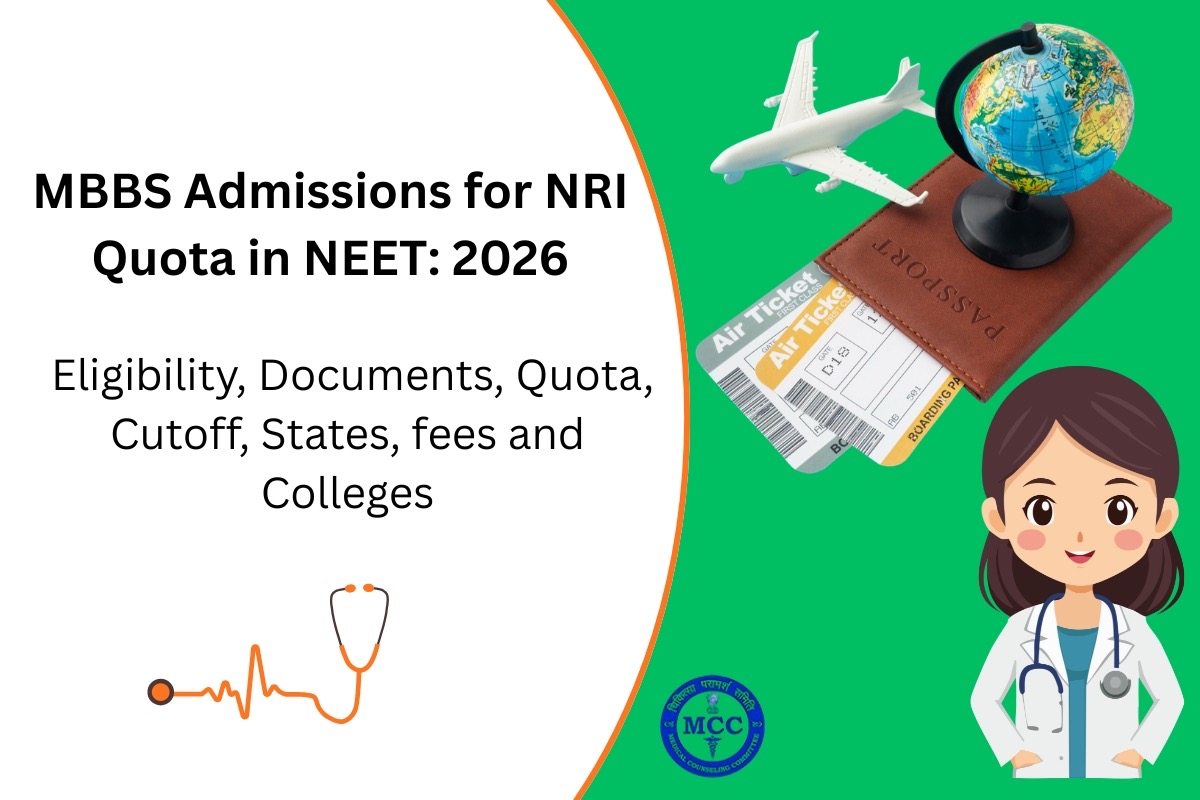
Introduction
For non-resident Indians (NRIs) and their families, pursuing an MBBS degree in India is a dream that comes with its own set of challenges and opportunities. With each passing year, the competition for NRI quota MBBS seats grows, and the rules evolve. As we move into NEET 2026, it's crucial for aspiring students and their parents to understand the eligibility, documents, admission process, cutoff scores, and fees involved. This guide is your one-stop solution for everything related to MBBS admissions under the NRI quota—whether you're aiming for a government or private medical college.
Understanding NRI Quota in MBBS Admissions
The NRI quota reserves a percentage of MBBS seats for NRI, OCI, and PIO candidates in both government and private medical colleges across India. Typically, around 15% of seats in participating colleges are earmarked for this category, but the availability and rules vary by state and institution. There are two main pathways for NRI quota admissions:
- All India Counselling (MCC): Covers deemed universities and select government colleges (like AIIMS Delhi).
- State Counselling: Individual states manage their own NRI quotas in government and private medical colleges.
Some states accept only genuine NRI candidates, while others allow NRI-sponsored students as well. Understanding each state's requirements is key to a successful application.
Who Qualifies for the NRI Quota?
Not every student living abroad is eligible for the NRI quota. Here’s a quick checklist:
- Applicants must have NRI, PIO, or OCI status, or be children of such individuals.
- Children of Indian government employees on foreign deputation also qualify.
- Students born abroad to Indian-origin parents are included.
- NRI-sponsored candidates must have a valid blood relationship with the sponsor (parent, sibling, uncle, or aunt).
Tip: Always check the latest guidelines issued by the Medical Council of India (MCI) and the respective state counselling authority before applying.
Eligibility Criteria for NRI Quota MBBS Admission (2026)
To be eligible for MBBS admission under the NRI quota via NEET 2026, candidates must satisfy both general NEET and specific NRI requirements:
- Clear NEET UG 2026 with a valid score.
- Be at least 17 years old by December 31, 2026.
- Complete 10+2 (or equivalent) with Physics, Chemistry, Biology/Biotechnology, and English.
- Score at least 50% in PCB subjects (for general category).
- Hold a valid passport and proof of NRI/OCI/PIO status.
- Possess an NRI certificate issued by the Indian Embassy/Consulate.
For NRI-sponsored students, a sponsorship affidavit and proof of relationship are mandatory.
MBBS Admission Process for NRI Quota Seats
The admission process involves several steps, and missing a single one could cost you a seat. Here’s a straightforward breakdown for 2026:
- Appear for NEET UG 2026: Qualify with a competitive score.
- Register for Counselling: Choose either MCC (for deemed universities/government institutions) or the relevant state counselling portal.
- Apply Under NRI Quota: Select the NRI category during registration and upload all supporting documents.
- Document Verification: Present original documents as per the schedule (online or in-person).
- Choice Filling & Seat Allotment: List your preferred colleges. Seat allocation is based on NEET rank, preferences, and document clearance.
- Fee Payment & Admission Confirmation: Pay the NRI quota fee within the stipulated time and complete the joining formalities at the allotted college.
NRI quota seats are limited and sometimes fill up quickly, so timely action is critical.
Required Documents for MBBS NRI Quota Admission
Document submission is a crucial part of the process. Here’s a checklist to keep handy:
- NEET-UG Admit Card and Score Card
- Allotment Letter (Provisional)
- Valid Indian Passport/Nationality Certificate
- Birth Certificate (if not in 10th certificate, must be in English)
- 10+2 Certificate and Mark Sheet
- Class 10 Certificate
- Government-issued ID (Aadhar/Passport/PAN/Driving License)
- Medical Fitness Certificate
- Transfer and Migration Certificates
- Recent Passport Size Photos (usually 8)
- Demand Draft for Fee Payment
- For NRI candidates: Passport & Visa of Sponsor, Embassy Certificate, Sponsorship & Relationship Affidavits
- If applicable: Caste Certificate, Disability Certificate, Gap Certificate
Note: Missing or incorrect documents can lead to rejection, so double-check before submission.
Fee Structure: Government vs. Private Colleges
MBBS fees for NRI quota seats vary widely depending on the type of college and the state. Here’s a comparison to give you a better idea:
| State | Govt. Colleges (per year) | Private Colleges (per year) |
|---|---|---|
| Himachal Pradesh | $20,000 | - |
| Haryana | $25,000 | - |
| Rajasthan | $24,000 | - |
| Puducherry | $100,000 (total course) | - |
| Madhya Pradesh | - | $21,000–$32,000 |
| Kerala | - | $22,000–$45,000 |
| Karnataka | - | $30,000–$50,000 |
| Andhra Pradesh | - | $40,000 |
| Gujarat | $22,000 | $33,750 |
| Bihar | - | $25,000–$35,000 |
| West Bengal | - | $22,000–$45,000 |
Generally, NRI quota fees in government colleges range from ₹15–25 lakh per year, while private colleges charge ₹25–50 lakh or more. Deemed universities may have even higher fees. Always check the latest official notifications for exact figures.
Cutoff Trends for NRI Quota in NEET 2026
Cutoff marks for the NRI quota are not fixed and change annually based on several factors:
- Number of NRI seats available
- College type (government, private, deemed)
- State-specific policies and competition
- Overall NEET performance that year
As a general reference, NRI quota cutoffs are often lower than those for general category seats. In many states, a NEET score between 250 and 350 has been enough for private colleges, while top government colleges may require 500+ marks. But these numbers are only indicative—always check the latest data during counselling.
| Category | NEET Cut-off Percentile (2026) |
|---|---|
| UR/EWS | 50th Percentile |
| OBC/SC/ST | 40th Percentile |
State-wise Overview: NRI Quota Seats in Government & Private Colleges
Each state manages its own NRI quota policies. Here’s a quick glance at a few popular choices:
- Himachal Pradesh: 20 government and 23 private NRI seats. Lower cutoffs and fees.
- Haryana: 21 government and 58 private seats. NRI-sponsored candidates allowed in private colleges.
- Rajasthan: 455 government NRI seats (highest in India); no private NRI quota.
- Punjab: 60 government and 108 private NRI seats. Welcoming environment for NRIs.
- Gujarat: 421 government and 234 private NRI seats. Reasonable fees.
- Puducherry: 27 government and 95 private seats. Popular for peaceful campus life.
- Jammu & Kashmir: 10 NRI quota seats in private medical colleges.
Deemed universities (all over India) also offer about 15% NRI seats, filled via the MCC all-India counselling.
Benefits & Challenges of MBBS Admission via NRI Quota
Benefits
- Lower competition compared to general category seats.
- Access to some of India’s top medical colleges with globally recognized degrees.
- Eligibility to practice in India and abroad after graduation.
Challenges
- Limited seat availability means careful planning is essential.
- Higher tuition fees than regular seats.
- Complex documentation and eligibility verification process.
- Staying updated on state-specific rules can be tricky for families living outside India.
Tip: Start preparing your documents and researching colleges several months before NEET results are declared.
Conclusion
Securing an MBBS seat in India under the NRI quota in 2026 requires careful attention to eligibility, documentation, and state-specific rules. While the fees are higher, the competition can be less intense, and the quality of medical education in India is globally respected. Whether you aim for a government or private college, start early, keep your paperwork in order, and stay informed about the latest updates from counselling authorities. If you need further guidance at any step, consider reaching out to experienced educational consultants who can make your journey smoother.
Latest Update
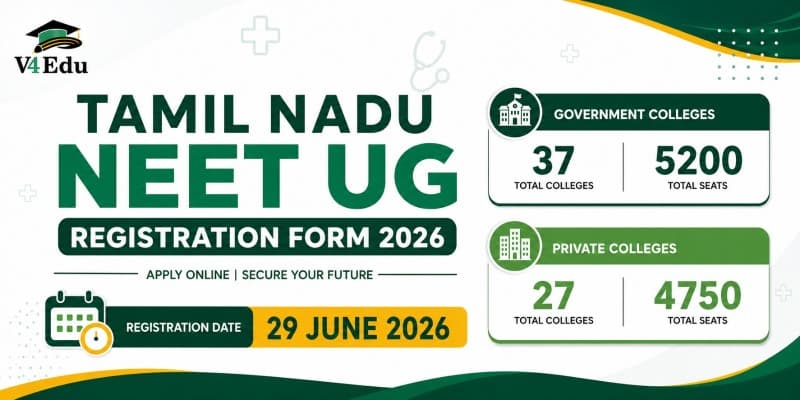
Tamil Nadu NEET UG Registration Form 2026
NEET UGRe-NEET 2026 Provisional Answer Key Released by NTA: Direct Link, Objection Process
NEET UGKarnataka MBBS Admission 2026: Private Medical Colleges List, Cutoff, Fees & Counselling
NEET UGKerala MBBS Admission 2026: Private Medical Colleges, Cut Offs, Fees & Counselling
NEET UGFrequently Asked Questions
Is there an NRI quota for MBBS in government medical colleges?
What documents are required for MBBS NRI quota admission?
How does the MBBS NRI quota fee differ between government and private colleges?
What is the typical NEET cutoff for NRI quota MBBS seats?
Can NRI-sponsored students apply for MBBS under the NRI quota?