Total MBBS Seats in India 2026: Government, Private & State-Wise Breakdown
Curious about MBBS seat availability in 2026? Get a detailed look at government and private medical colleges, as well as state-wise seat distribution across India.
 V4Edu
V4Edu
Introduction
Every year, thousands of students dream about pursuing MBBS in India, but one crucial question always stands out: How many MBBS seats are actually available? With the 2026 admissions on the horizon, it’s important to know the latest numbers, understand the types of colleges, and see how seats are spread across different states. This guide will walk you through all the key details you need to make an informed decision.
Understanding MBBS Seats: The Basics
MBBS seats in India are divided mainly between government and private medical colleges. The total count changes almost every year due to new colleges opening up and seat increments by regulatory bodies like the National Medical Commission (NMC). For 2026, experts expect a further rise in total seats, keeping in line with the government’s push to improve healthcare infrastructure.
- Government Colleges: Run by central or state governments, these colleges usually offer lower fees and intense competition.
- Private Colleges: Privately managed institutions with higher fees but greater number of seats in some states.
- Deemed Universities: Autonomous institutions recognized by the UGC, often with their own admission criteria but included in NEET UG.
Let’s break down the numbers and see how MBBS seats are distributed in 2026.
Expected Total MBBS Seats in 2026
By 2026, India is projected to have over 115,000 MBBS seats across government and private institutions combined. The growth is impressive, especially compared to previous years. Here’s a quick look:
| Year | Government Seats | Private Seats | Total Seats |
|---|---|---|---|
| 2022 | 48,000 | 44,000 | 92,000 |
| 2024 | 56,000 | 48,000 | 104,000 |
| 2026 (Projected) | 62,000+ | 53,000+ | 115,000+ |
Note: Final numbers may vary based on NMC approvals and new college establishments.
Types of Medical Colleges: Government vs Private
Choosing between government and private colleges can be overwhelming. Here’s a quick comparison to help you decide:
| Aspect | Government Colleges | Private Colleges |
|---|---|---|
| Fees (per year) | ₹10,000 – ₹1 lakh | ₹7 lakh – ₹25 lakh |
| Competition | Very High | Moderate to High |
| Facilities | Generally Good | Varies (some excellent, some average) |
| Seat Reservation | Yes (as per govt norms) | Limited (state quota, management quota) |
Tip: If affordability and exposure to diverse patients matter most, aim for government colleges. For more flexibility in seat availability, private colleges could be an option—just be ready for higher fees.
State-Wise MBBS Seat Distribution for 2026
Seat distribution varies greatly from state to state. States like Maharashtra, Tamil Nadu, Karnataka, and Uttar Pradesh have the highest seat counts, thanks to a large number of both government and private colleges. Here’s a snapshot of how things look across major states for 2026:
| State | Government Seats | Private Seats | Total Seats |
|---|---|---|---|
| Maharashtra | 10,200 | 9,400 | 19,600 |
| Tamil Nadu | 7,400 | 6,700 | 14,100 |
| Karnataka | 6,500 | 10,000 | 16,500 |
| Uttar Pradesh | 8,100 | 7,900 | 16,000 |
| Rajasthan | 5,700 | 2,300 | 8,000 |
| Gujarat | 4,800 | 3,600 | 8,400 |
| West Bengal | 4,000 | 1,500 | 5,500 |
| Kerala | 3,200 | 2,600 | 5,800 |
| Andhra Pradesh | 2,900 | 3,400 | 6,300 |
| Others | 9,200 | 5,200 | 14,400 |
Numbers are approximate for 2026; check individual state medical council notifications for final figures.
States With Most MBBS Seats
- Maharashtra – Largest number, diverse options
- Karnataka – High private seat share
- Tamil Nadu – Consistent growth in government seats
Some northeastern and smaller states still have fewer seats, making competition even tougher for local students. If you’re open to relocating, you might find better chances in states with higher private seat availability.
How Are MBBS Seats Allotted?
All MBBS seats, whether in government or private colleges, are allotted through NEET UG. Here’s a stepwise summary of the process:
- Appear for NEET UG and obtain a qualifying score.
- Participate in national and state counseling rounds.
- Seats are allotted based on merit, reservation policy, and preferences.
- Government seats are filled first, followed by private, management, and NRI quotas.
Be sure to keep an eye on counseling schedules and cut-off trends for your category and state.
Tips for MBBS Aspirants in 2026
- Research: Always check the latest seat matrix before counseling begins.
- Backup Options: Consider private colleges or other states if your NEET score is borderline for government colleges.
- Reservation Policies: Factor in state domicile rules and category benefits.
- Fee Structure: Understand all costs involved, including tuition, hostel, and other fees.
Quick Tip: For states like Karnataka or Tamil Nadu, private seat availability often outnumbers government seats, but fees can be significantly higher.
Conclusion
The journey to an MBBS seat in India is challenging, but with over 115,000 seats projected in 2026, your chances are better than ever—if you plan wisely. Stay updated with the latest seat matrix, understand the nuances of government and private options, and always keep a backup plan. With the right approach and timely information, you can turn your medical dream into reality.
Latest Update
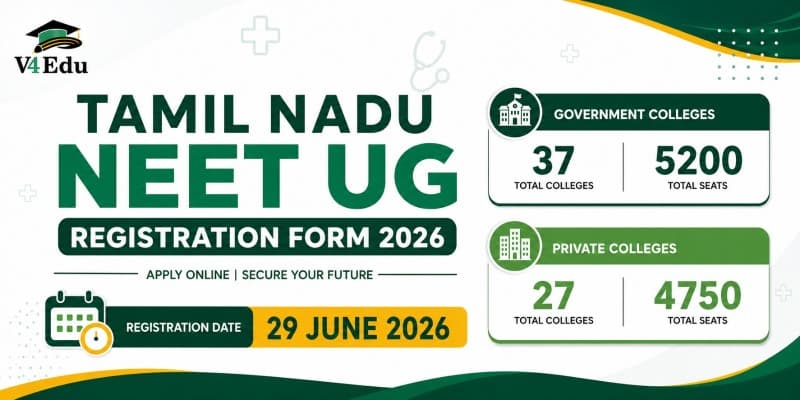
Tamil Nadu NEET UG Registration Form 2026
NEET UGRe-NEET 2026 Provisional Answer Key Released by NTA: Direct Link, Objection Process
NEET UGKarnataka MBBS Admission 2026: Private Medical Colleges List, Cutoff, Fees & Counselling
NEET UGKerala MBBS Admission 2026: Private Medical Colleges, Cut Offs, Fees & Counselling
NEET UGFrequently Asked Questions
How many MBBS seats are expected in India in 2026?
Which state offers the most MBBS seats?
Are all MBBS seats allotted through NEET?
What is the difference between government and private MBBS colleges?
How should I choose a state for MBBS admission?